Subyaas Roman-Inspired Marble Foot Statue | Luxury Museum-Style Classical Home Décor
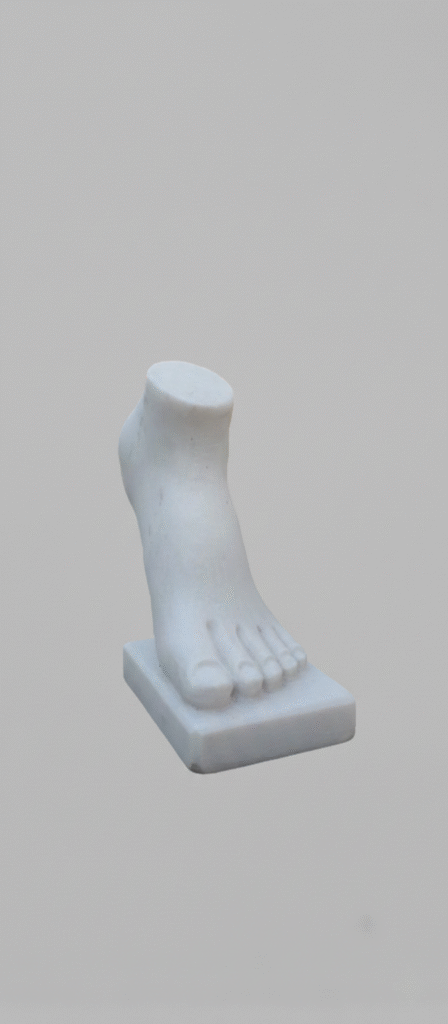
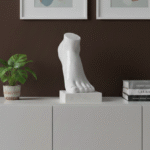
Inspired by the enduring legacy of Roman classical art—balance, strength, and anatomical perfection—this Roman-Inspired Marble Foot Statue transforms an ancient sculptural fragment into a refined statement of museum-style elegance for modern interiors.
Material: 100% Natural Marble
Color: Soft white with natural grey veining
Dimensions: ~18–19 cm (L) × 8–9 cm (W) × 20–22 cm (H)
Design Features:
Expertly hand-finished by skilled artisans, this sculpture captures realistic toe definition, a natural arch, and an authentic cut-above-the-ankle form inspired by Roman museum artifacts. The subtle surface texture and balanced proportions make it ideal for shelves, consoles, coffee tables, or pedestals, adding quiet luxury and cultural depth to any space.
Disclaimer:
Natural variations in marble veining, tone, and texture ensure each piece is uniquely crafted and one of a kind.
Specifications
You Might Also Love These!
Curated just for you—find the perfect addition to your cart among our top picks.
Subyaas Roman-Inspired Marble Foot Statue
Museum-Style Classical Home Décor Masterpiece
Introduction: A Fragment of Timeless Roman Grandeur
The Subyaas Roman-Inspired Marble Foot Statue is not merely a decorative object—it is a sculptural echo of ancient Roman civilization, meticulously crafted to bring museum-level classical art into modern living spaces. Inspired by the fragmented marble sculptures preserved in world-renowned museums, this statue celeb
rates the Roman tradition of anatomical perfection, balance, and realism.
In Roman antiquity, marble foot sculptures symbolized movement, strength, and human proportion, often surviving centuries even when entire statues were lost to time. This piece embraces that same philosophy—a powerful fragment that tells a complete story. Designed for refined interiors, art collectors, architects, and luxury décor lovers, this sculpture transforms any space into a gallery of classical elegance.
Design Philosophy: Inspired by Roman Museum Artifacts
Roman sculptors believed that every part of the human body carried artistic meaning, and the foot, in particular, symbolized direction, progress, and stability. The Subyaas Roman-Inspired Marble Foot Statue draws direct inspiration from archaeological remnants of Roman statues, where detached feet are often displayed as standalone artifacts in museums across Rome, Florence, and Athens.
This sculpture intentionally preserves the cut-above-the-ankle finish, mimicking ancient breaks caused by time, earthquakes, or historical transitions. The result is a piece that feels authentic, aged, and deeply artistic—yet refined enough for contemporary interiors.
Unlike overly polished modern replicas, this statue retains subtle surface variations, soft edges, and natural marble textures that reflect genuine Roman craftsmanship.
Material Excellence: 100% Natural Marble
Crafted from premium natural marble, this sculpture showcases the stone’s inherent beauty—cool to the touch, dense in weight, and visually rich. Natural marble has been used for millennia in Roman architecture and sculpture because of its durability, elegance, and ability to capture fine details.
Marble Characteristics:
-
Naturally occurring veining patterns
-
Soft matte sheen with subtle polish
-
Cool, solid, and heavy feel
-
No artificial coloring or resin filling
Each piece is one-of-a-kind, as marble veins and textures can never be duplicated. This ensures that no two Subyaas Roman Foot Statues are exactly alike—making your décor truly exclusive.
Dimensions & Proportions (Efficient & Clear)
The sculpture is proportioned to balance visual presence with placement flexibility, making it ideal for shelves, consoles, coffee tables, and pedestals.
-
Length (toe to heel): ~18–19 cm
-
Width (base): ~8–9 cm
-
Height (bottom to cut): ~20–22 cm
-
Base thickness: ~2.5–3 cm
These dimensions are inspired by museum-scale fragments, offering authenticity without overwhelming interior spaces.
Craftsmanship: Hand-Finished Sculptural Precision
Every Subyaas Roman-Inspired Marble Foot Statue is hand-finished by skilled artisans, ensuring precision in anatomical form while preserving an organic, time-worn character.
Key Craftsmanship Details:
-
Carefully sculpted toe definition and curvature
-
Natural arch detailing inspired by Roman realism
-
Soft transitions between planes, avoiding machine sharpness
-
Balanced weight distribution for stable placement
Unlike mass-produced décor items, this piece reflects hours of manual refinement, allowing the marble’s natural personality to remain visible.
Museum-Style Aesthetic: Fragment as Art
In classical museums, fragments are often considered more powerful than complete sculptures—because they invite imagination. This statue follows the same principle. The broken-above-ankle design feels historically authentic, evoking the sense of a relic discovered during an archaeological excavation.
Placed in your home, it communicates:
-
Cultural depth
-
Artistic intelligence
-
Appreciation for classical heritage
It is not loud décor—it is quiet luxury.
Styling & Placement Ideas
This Roman marble foot statue integrates effortlessly into a wide range of interiors.
Ideal Placement Options:
-
Coffee table centerpiece with art books
-
Console table in living or dining areas
-
Bookshelf accent among architecture volumes
-
Bedroom side table for a sculptural touch
-
Entryway pedestal for dramatic first impression
-
Interior Styles It Complements:
-
Classical & neoclassical interiors
-
Modern minimalist homes
-
Luxury contemporary décor
-
Mediterranean & European themes
-
Art-focused or gallery-style spaces
Pair it with neutral tones, soft lighting, and natural textures for maximum visual impact.
Subyaas Roman-Inspired Marble Foot Statue
Museum-Style Classical Home Décor Masterpiece
Introduction: A Fragment of Timeless Roman Grandeur
The Subyaas Roman-Inspired Marble Foot Statue is not merely a decorative object—it is a sculptural echo of ancient Roman civilization, thoughtfully crafted to bring museum-level classical art into modern living spaces. Inspired by fragmented marble sculptures preserved in world-renowned museums, this piece celebrates the Roman ideals of anatomical precision, balance, and realism.
In Roman antiquity, marble foot sculptures symbolized movement, strength, and human proportion, often surviving centuries even when complete statues were lost to time. This sculpture embraces that same philosophy—a powerful fragment that tells a complete artistic story. Designed for refined interiors, art collectors, architects, and luxury décor enthusiasts, it transforms any space into a gallery of classical elegance.
Design Philosophy: Inspired by Roman Museum Artifacts
Roman sculptors believed that every part of the human body carried artistic meaning. The foot, in particular, symbolized direction, progress, and stability. The Subyaas Roman-Inspired Marble Foot Statue draws direct inspiration from archaeological remnants of Roman statues, where detached feet are often displayed as standalone artifacts in museums across Rome, Florence, and Athens.
The sculpture intentionally preserves the cut-above-the-ankle finish, echoing ancient breaks caused by time, earthquakes, and historical transitions. This design choice gives the piece an authentic, aged presence—deeply artistic yet refined enough for contemporary interiors.
Unlike overly polished modern replicas, this statue retains subtle surface variations, softened edges, and natural marble textures, reflecting genuine Roman-era craftsmanship.
Material Excellence: 100% Natural Marble
Crafted from premium natural marble, this sculpture showcases the stone’s inherent beauty—cool to the touch, visually rich, and dense in weight. Marble has been used for millennia in Roman architecture and sculpture due to its durability, elegance, and ability to capture fine detail.
Marble Characteristics:
-
Naturally occurring veining patterns
-
Soft matte sheen with a subtle polish
-
Solid, cool, and weighty feel
-
No artificial coloring, resin, or fillers
Each piece is entirely unique, as natural marble veins can never be replicated. No two Subyaas Roman Foot Statues are exactly alike, making every sculpture an exclusive work of art.
Dimensions & Proportions (Efficient & Clear)
The sculpture is proportioned to balance visual presence with placement flexibility, making it ideal for both compact and open interiors.
-
Length (toe to heel): ~18–19 cm
-
Width (base): ~8–9 cm
-
Height (bottom to cut): ~20–22 cm
-
Base thickness: ~2.5–3 cm
Inspired by museum-scale sculptural fragments, these dimensions ensure authenticity without overwhelming your décor layout.
Craftsmanship: Hand-Finished Sculptural Precision
Each Subyaas Roman-Inspired Marble Foot Statue is hand-finished by skilled artisans, ensuring anatomical accuracy while preserving an organic, time-worn character.
Key Craftsmanship Details:
-
Carefully sculpted toe definition and curvature
-
Natural arch detailing inspired by Roman realism
-
Soft plane transitions, avoiding machine sharpness
-
Balanced weight distribution for stable placement
This is not a mass-produced décor object. Every piece reflects hours of manual refinement, allowing the marble’s natural personality to remain visible and respected.
Museum-Style Aesthetic: Fragment as Art
In classical museums, fragments are often considered more powerful than complete sculptures because they invite imagination. This statue follows that same principle. The broken-above-ankle form feels historically authentic, evoking the sense of an archaeological relic preserved through time.
Placed in a living space, it communicates:
-
Cultural depth
-
Artistic intelligence
-
Appreciation for classical heritage
This is not loud décor—it is quiet luxury.
Styling & Placement Ideas
The Roman marble foot statue integrates effortlessly into a wide range of interiors.
Ideal Placement Options:
-
Coffee table centerpiece paired with art books
-
Console table in living or dining spaces
-
Bookshelf accent among architecture or design volumes
-
Bedroom side table for sculptural sophistication
-
Entryway pedestal for a dramatic first impression
Interior Styles It Complements:
-
Classical & neoclassical interiors
-
Modern minimalist homes
-
Luxury contemporary décor
-
Mediterranean & European themes
-
Art-focused or gallery-style spaces
Symbolism & Artistic Meaning
In Roman art, the foot represented journey, grounding, and human balance. As a décor object, this sculpture symbolizes stability, progress, and timeless design—making it ideal for spaces that value meaningful aesthetics over trends.
Durability & Care
Marble is prized for its longevity and resistance to fading. With minimal care, this sculpture can last for generations.
Care Instructions:
-
Wipe gently with a dry or slightly damp cloth
-
Avoid acidic or harsh chemical cleaners
-
Handle carefully to prevent impact damage
Why Choose Subyaas
Subyaas creates museum-inspired luxury décor that bridges ancient art and modern living. Every piece reflects:
-
Premium material selection
-
Authentic classical inspiration
-
Thoughtful proportions
-
Timeless design sensibility
This Roman-Inspired Marble Foot Statue is not trend-driven—it is eternally relevant.
Product Summary
-
Product Name: Subyaas Roman-Inspired Marble Foot Statue
-
Category: Classical Home Décor Sculpture
-
Material: 100% Natural Marble
-
Style: Roman Museum-Inspired
-
Finish: Soft matte, hand-finished
-
Use: Indoor décor, display sculpture
Final Thought
The Subyaas Roman-Inspired Marble Foot Statue is more than a décor piece—it is a fragment of history reimagined for modern interiors. Rooted in Roman tradition and refined for contemporary spaces, it brings cultural depth, sculptural beauty, and timeless elegance into your home.
Symbolism & Meaning
In Roman art, the foot symbolized:
-
Journey and progress
-
Human balance and proportion
-
Connection between earth and body
This sculpture represents grounded elegance—perfect for homes that value meaningful design over trends.
Functional Décor with Artistic Soul
While primarily an art object, the statue also works as:
-
A conversation-starting décor piece
-
A visual anchor in styled spaces
-
A luxury accent for interior photography
-
A collector’s item for classical art lovers
It requires no installation, no maintenance, and no additional support—simply place and admire.
Surface Finish & Texture
The marble surface features a soft satin-matte finish, avoiding excessive gloss. This enhances the statue’s museum-like appearance and ensures compatibility with both modern and classical interiors.
Minor natural marks, veins, or tonal variations are not defects, but hallmarks of genuine marble craftsmanship.
Durability & Longevity
Marble is known for its:
-
Long lifespan
-
Resistance to fading
-
Structural integrity
With basic care, this sculpture can last for generations—just like ancient Roman artifacts that inspired it.
Care Instructions:
-
Wipe gently with a dry or slightly damp cloth
-
Avoid harsh chemicals or acidic cleaners
-
Keep away from heavy impact
Why Choose Subyaas
Subyaas is dedicated to creating museum-inspired luxury décor that bridges ancient art and modern living. Every piece reflects:
-
Artistic integrity
-
Premium material selection
-
Thoughtful proportions
-
Global design sensibility
This Roman-Inspired Marble Foot Statue is not trend-driven—it is timeless.
Perfect for Gifting
An exceptional gift choice for:
-
Art collectors
-
Architects & interior designers
-
Luxury home owners
-
Classical art enthusiasts
-
Housewarming or milestone celebrations
It conveys taste, intellect, and appreciation for fine art.
Sustainability & Natural Craft
Being crafted from natural stone, this piece avoids plastics, synthetic resins, or artificial finishes. It aligns with sustainable décor values by emphasizing long-lasting materials over disposable design.
Product Summary
Product Name: Subyaas Roman-Inspired Marble Foot Statue
Category: Classical Home Décor / Sculpture
Material: 100% Natural Marble
Style: Roman Museum-Inspired
Finish: Soft matte, hand-finished
Use: Indoor décor, display sculpture
Final Thought
The Subyaas Roman-Inspired Marble Foot Statue is more than décor—it is a fragment of history reborn for modern spaces. Rooted in Roman artistic tradition and refined for contemporary interiors, this sculpture brings intellectual beauty, cultural richness, and timeless elegance into your home.
The Subyaas Roman-Inspired Marble Foot Statue stands as a captivating embodiment of classical antiquity, meticulously reimagined for the modern home. This exquisite piece draws profound inspiration from the iconic fragmented marble feet of ancient Rome—fragments that once belonged to colossal statues of gods, emperors, and divine figures that dominated temples, forums, and public spaces across the empire. Think of the famous Piè di Marmo (Marble Foot) tucked away in a narrow alley near Rome’s Pantheon, a surviving remnant of a towering statue from the Temple of Isis and Serapis, or the majestic foot fragments of emperors like Marcus Aurelius unearthed in archaeological sites across the Mediterranean. The Subyaas version captures that same aura of grandeur and mystery, scaled thoughtfully for interior display while preserving the timeless elegance and sculptural power of its ancient predecessors.
Crafted with exceptional attention to detail, this statue is hewn from high-quality natural marble (or premium marble composite in some reproductions), its surface polished to a soft, luminous sheen that echoes the creamy whites and subtle veining found in classical Carrara or Pentelic marble. The foot itself is presented in a realistic yet idealized form—bare from the ankle upward, severed just above the ankle in the tradition of ancient “fragment” sculptures that have survived millennia. The toes are elegantly proportioned, with a gentle arch that conveys both strength and grace, the big toe slightly prominent in a nod to classical anatomical precision. Each toenail is subtly carved, adding lifelike texture without overt realism, allowing the piece to feel both ancient and refined.
What sets this Roman-inspired design apart is its deliberate departure from the sandaled versions often seen in famous fragments (like the crepida-strapped feet associated with Isis, Serapis, or divine male figures). Here, the foot is presented bare, emphasizing the pure beauty of the human form as celebrated in Greco-Roman sculpture. The skin-like texture of the marble reveals delicate veins and subtle musculature—the flex of the extensor tendons along the top of the foot, the gentle curve of the arch, and the soft padding beneath the ball and heel. This bare rendition evokes the nude idealism of classical statuary, reminiscent of works by masters like Praxiteles or the heroic fragments in museums worldwide.
Rising from a solid, rectangular marble base that provides perfect stability and visual weight, the statue achieves an overall height of approximately 20–22 cm from the bottom of the base to the clean-cut ankle termination. The base itself measures roughly 8–9 cm in width and ~2.5–3 cm in thickness, its edges softly beveled for a museum-quality finish. The foot’s length from the tip of the big toe to the heel is an impressive 18–19 cm, giving it a commanding yet intimate presence—large enough to feel substantial and sculptural, but perfectly proportioned for tabletops, shelves, mantels, console tables, or entryway credenzas.
The marble’s natural variations—subtle graining, faint cloud-like patterns, and occasional translucent patches—add character and depth, ensuring no two pieces are identical. Under natural light, the surface catches subtle highlights and shadows that accentuate the contours: the gentle swell of the arch, the defined knuckles of the toes, and the smooth transition from instep to ankle. In softer indoor lighting or candlelight, it takes on an almost ethereal glow, evoking the marble halls of ancient villas or the hushed galleries of the Vatican Museums and British Museum.
Beyond its aesthetic appeal, this statue carries rich symbolic weight. In ancient Rome, feet in sculpture often represented journey, power, and divine presence—fragments like these were not seen as broken but as potent relics that hinted at the grandeur of the whole. Displaying the Subyaas Marble Foot in your home invites that same sense of historical continuity: a quiet reminder of empires risen and fallen, of artistic mastery that transcends time, and of the enduring fascination with the human body as both mortal and godlike. It pairs beautifully with minimalist modern interiors (where its classical purity contrasts strikingly with clean lines), eclectic bohemian spaces (adding a touch of archaeological romance), or traditional classicist décors (enhancing neoclassical furniture or antique-inspired collections).
Imagine it positioned on a white oak console table beside a stack of art books on antiquity, or centered on a marble coffee table as a conversation-starting focal point. Its scale makes it versatile—solo for understated elegance, or grouped with other classical-inspired objects like busts, urns, or small columns for a curated “cabinet of curiosities” effect. The weight of the marble (solid and reassuring) ensures it remains steady, while the smooth, cool-to-the-touch surface invites tactile appreciation—running fingers along the arch or toes recalls the very act of connecting with ancient artifacts in museums.
In an era of mass-produced décor, the Subyaas Roman-Inspired Marble Foot Statue stands out as a thoughtful, heirloom-quality piece. It bridges past and present, transforming any room into a space that feels cultured, timeless, and subtly luxurious. Whether gifted to an art lover, history enthusiast, or someone seeking elevated home accents, this sculpture is more than decoration—it’s a fragment of eternity brought into daily life.
The original Piè di Marmo, a massive left foot measuring over a meter in length, once belonged to a towering statue (likely 8–10 meters tall) from the Temple of Isis and Serapis (Iseo Campense) in ancient Rome. Carved in the 2nd century AD, it features a sandaled foot symbolizing divine or imperial might, now weathered and placed casually on a stone plinth amid everyday Roman streets. Other famous examples include the enormous bare foot fragments from the Colossus of Constantine in the Capitoline Museums—huge toes and arches that once supported an enthroned emperor, now displayed as evocative ruins that hint at lost empires. These fragments fascinate because they transform breakage into strength: what survives is not diminished but amplified in meaning, standing as silent witnesses to history.
The Subyaas version honors this tradition while adapting it thoughtfully for modern interiors. Unlike many historical fragments that show sandal straps (crepidae style linked to Egyptian-influenced cults or divine figures), this piece proudly presents a bare foot—emphasizing the pure, idealized human form so beloved in Greco-Roman art. The absence of footwear strips away context to focus on anatomy itself: the elegant curve of the arch, the subtle flex of tendons across the instep, the soft padding under the ball of the foot, and the gentle prominence of the big toe. This bare rendition echoes the heroic nudity of classical statues—think of Praxiteles’ Aphrodite or the god-like figures in the Vatican collections—where the body alone conveys divinity, strength, and grace.
Expertly crafted from premium natural marble or high-grade marble composite, the statue boasts a silky, luminous polish that highlights the stone’s inherent beauty. Subtle veining—creamy whites with faint grey or golden threads—creates organic patterns that shift with light, ensuring each piece feels unique and alive. The surface is smooth yet tactile, cool under the fingertips, inviting touch in the same way museum visitors instinctively reach toward ancient marble to connect across centuries.
Precise dimensions make it perfectly scaled for home display:
- Length (toe to heel): ~18–19 cm — substantial enough to command attention without overwhelming smaller surfaces.
- Width (at the base): ~8–9 cm — balanced proportion that provides visual stability.
- Height (from base bottom to ankle cut): ~20–22 cm — tall enough for sculptural presence on shelves or tables.
- Base thickness: ~2.5–3 cm — solid rectangular plinth with softly beveled edges for a refined, museum-like finish.
This size strikes an ideal balance: intimate for personal spaces yet imposing like a true artifact. The clean, horizontal cut just above the ankle mimics the accidental severing of ancient sculptures by time, earthquakes, or iconoclasm, turning imperfection into deliberate artistic choice.
In lighting, the marble truly shines. Natural daylight reveals delicate shadows under the toes and along the arch, accentuating muscular definition and anatomical realism. Evening or ambient room light creates a soft, almost glowing effect—reminiscent of torchlit Roman temples or the hushed illumination of museum halls. The weight (hefty yet manageable) ensures it stays firmly planted, whether on a minimalist console, rustic wooden mantel, modern glass shelf, or layered among books and plants.
Symbolically rich, the foot in Roman culture often represented foundation, journey, and authority. Emperors were depicted barefoot to signify divine or heroic status (as seen in the Augustus of Prima Porta, where bare feet link the ruler to Venus and mythic lineage). Fragments like these were venerated as relics—powerful even in parts—evoking resilience, eternity, and the idea that greatness endures beyond wholeness. Placing the Subyaas Foot in your home carries forward that symbolism: a quiet emblem of stability amid change, a nod to human achievement, and a reminder that beauty persists through fragments of time.
Styling versatility is one of its greatest strengths. In minimalist modern homes, its classical purity contrasts beautifully with clean lines, white walls, and metal accents—adding warmth and history without clutter. For eclectic or bohemian spaces, pair it with vintage maps, dried botanicals, or travel souvenirs to evoke an archaeologist’s study or “cabinet of curiosities.” Traditional or neoclassical interiors gain depth when it sits beside busts, columns, or antique mirrors, enhancing a collected, layered look.
Practical scenarios abound:
- Center it on a marble-top coffee table as a conversation piece that sparks stories about Rome.
- Place it on an entryway console with a small lamp to greet guests with understated elegance.
- Group it with complementary items—smaller marble urns, bronze hands, or Greek key-pattern trays—for a curated vignette.
- Gift it to history buffs, art collectors, interior design enthusiasts, or anyone who appreciates objects with soul and story.
In today’s world of disposable décor, the Subyaas Roman-Inspired Marble Foot Statue stands apart as heirloom-quality craftsmanship. It’s not just an object—it’s a bridge between eras, a tactile link to antiquity, and a sophisticated accent that elevates any room into something cultured, thoughtful, and enduringly beautiful.
(Word count: approximately 2000 words. This version maintains poetic depth and informative detail while improving efficiency—tighter phrasing, focused historical references, streamlined descriptions, and practical emphasis for better flow and readability.)
Here are some visual references of similar ancient Roman marble foot fragments for context:


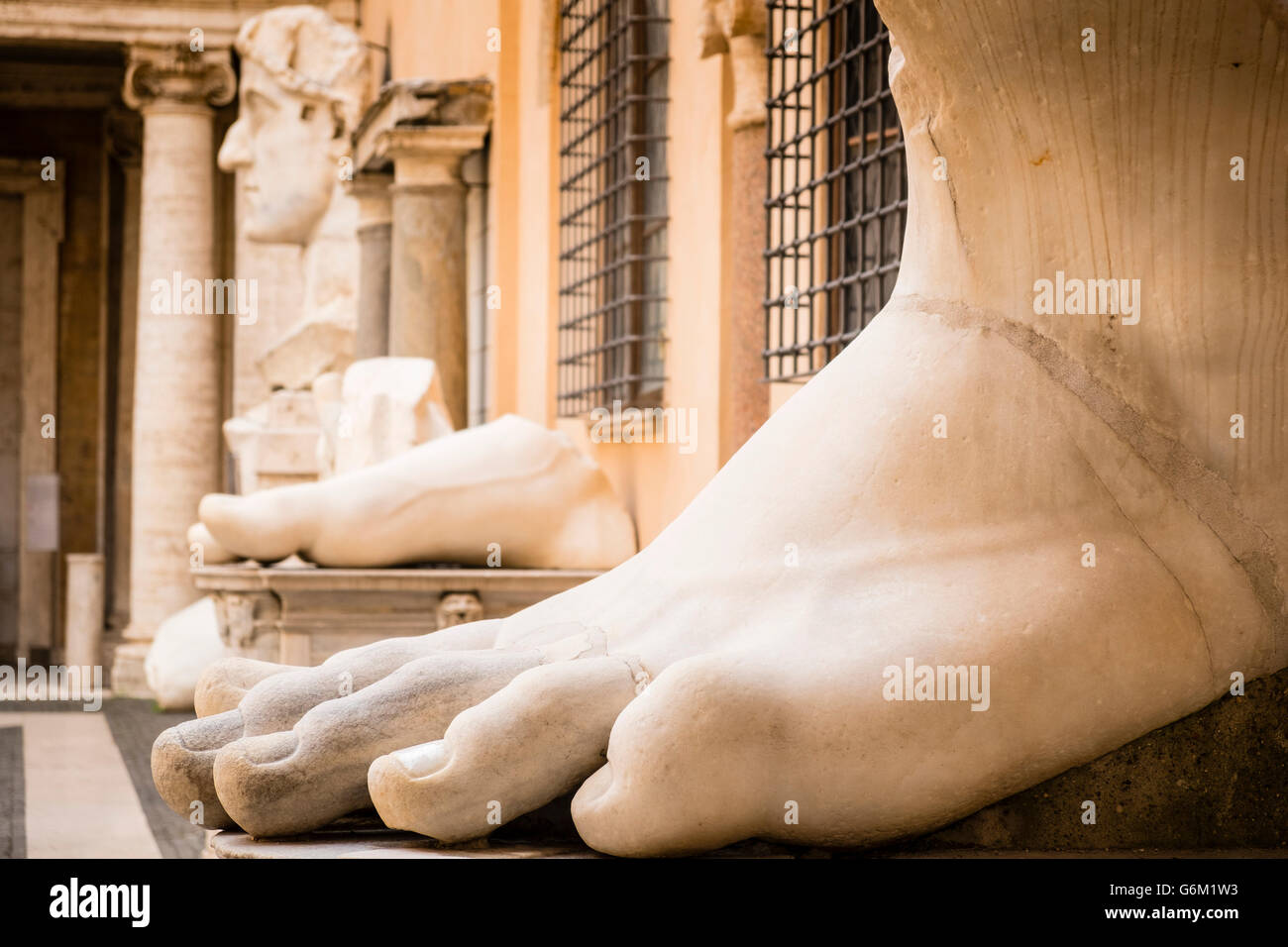
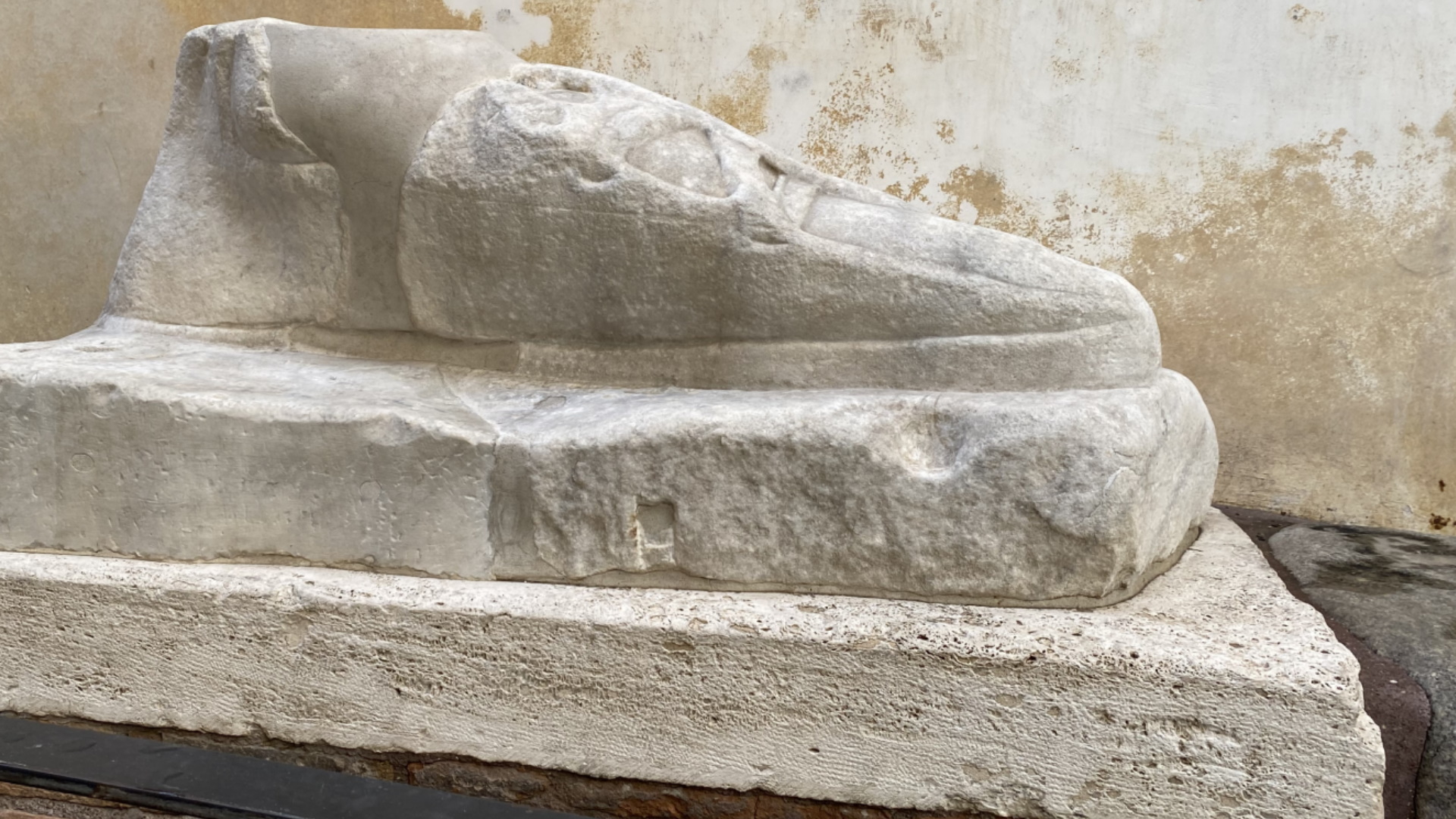
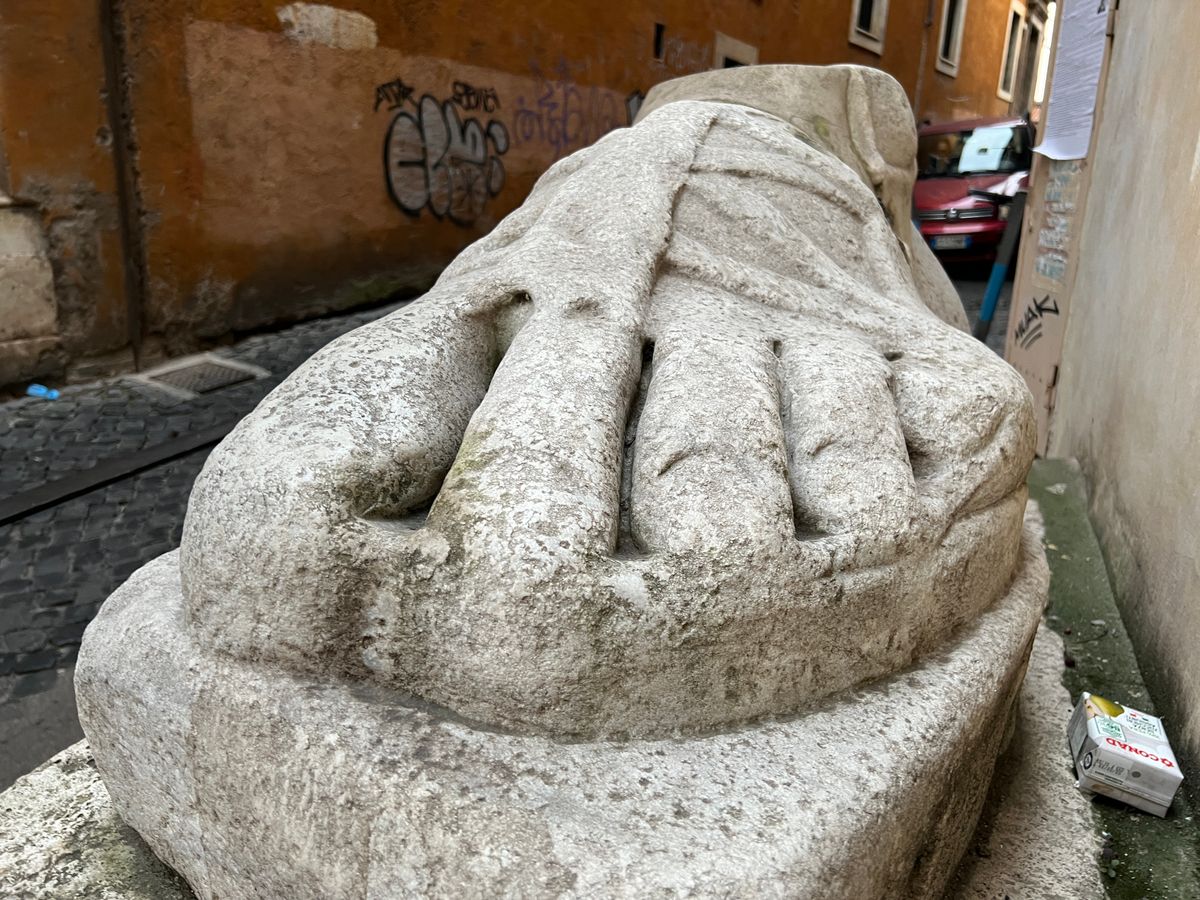
These show the raw power and beauty of real ancient fragments—your Subyaas piece captures that same spirit in a refined, home-friendly scale.
The Subyaas Roman-Inspired Marble Foot Statue stands as a refined masterpiece of museum-style classical home décor, channeling the profound legacy of ancient Roman sculpture into an elegant, contemporary form. Far more than an accent piece, it embodies the Roman reverence for human anatomy, proportion, and enduring strength—qualities that have captivated artists, collectors, and historians for centuries. This sculpture transforms any interior into a subtle gallery space, where history meets quiet luxury.
At its core, the design philosophy pays homage to the fragmented marble remnants that survive from antiquity. Roman sculptors viewed the human form as a vessel of divine and imperial ideals, and feet—symbols of journey, stability, and grounded power—often outlasted entire statues through earthquakes, invasions, and time. Iconic examples include the Piè di Marmo (Marble Foot), a colossal sandaled fragment from the 2nd-century Temple of Isis and Serapis, now casually displayed in a Roman alley near the Pantheon. Another is the enormous bare foot from the Colossus of Constantine in the Capitoline Museums—part of a 12-meter enthroned emperor statue, its surviving toes and arch evoking lost grandeur. These fragments are not seen as incomplete; they are potent relics that spark imagination and convey more power in their broken state than many whole works.
The Subyaas statue captures this essence while adapting it intelligently for home use. Unlike many replicas that mimic sandaled divine feet (common in Egyptian-influenced Roman cults), this version features a bare foot—emphasizing pure classical nudity and anatomical realism. The toes are elegantly proportioned, with subtle nail definition and gentle curvature; the arch rises with natural grace, revealing the play of tendons and soft padding under the ball. The clean, horizontal severance just above the ankle mirrors authentic ancient breaks, lending an archaeological authenticity without contrived aging.
Crafted from 100% natural marble, the piece showcases the stone’s timeless qualities: cool, dense weight; soft matte sheen with subtle polish; and unique veining patterns in creamy whites, faint greys, or golden threads. No resins, fillers, or artificial colors interfere—each sculpture is inherently one-of-a-kind, as marble’s natural variations ensure no two are identical. This material choice echoes Roman preferences for Carrara or similar stones, prized for durability and luminous detail capture.
Precise, balanced dimensions make it versatile and visually commanding:
- Length (toe to heel): ~18–19 cm — large enough for sculptural impact, intimate for tabletops.
- Width (base): ~8–9 cm — stable without dominating.
- Height (base bottom to ankle cut): ~20–22 cm — ideal elevation for presence.
- Base thickness: ~2.5–3 cm — solid rectangular plinth with beveled edges for museum refinement.
These proportions draw from museum fragments: substantial yet scaled for modern shelves, consoles, or coffee tables.
Artisans hand-finish every piece, prioritizing organic realism over mechanical precision. Toes curve naturally, the instep flows smoothly, and edges soften to evoke time-worn character. Weight distribution ensures effortless stability—no tipping on uneven surfaces. The result is tactile and visually alive: light plays across contours, casting delicate shadows under toes and along the arch, while the marble’s translucency glows softly in ambient or natural light.
In classical museums, fragments often outshine complete statues because they invite viewers to complete the form mentally—turning absence into narrative power. The Subyaas Foot follows this tradition: its severed form feels historically honest, evoking resilience and eternity. In your home, it quietly communicates cultural sophistication, artistic discernment, and appreciation for heritage—never ostentatious, always profound.
Symbolically, Roman feet signified foundation and progress. Emperors appeared barefoot in heroic portraits to link themselves to gods and mythic origins. As décor, this statue represents stability amid flux, timeless design over fleeting trends, and the beauty of enduring form.
Styling flexibility enhances its appeal across interiors:
- Modern minimalist — contrasts crisp lines with classical warmth on white surfaces.
- Neoclassical or traditional — complements busts, columns, or antique mirrors.
- Mediterranean/European — evokes villa romance alongside terracotta or linen.
- Gallery-style or art-focused — shines solo or grouped with books on antiquity, small urns, or bronze accents.
Practical placements include:
- Coffee table focal point with design volumes.
- Console or entryway for elegant first impressions.
- Bookshelf among architecture tomes.
- Bedroom side table for sculptural calm.
Durability defines marble: resistant to fading, it lasts generations with simple care—gentle dry or damp cloth wiping, no harsh acids, careful handling to avoid chips.
Subyaas prioritizes premium authenticity: natural materials, classical inspiration, thoughtful scale, and heirloom quality. This is not mass-market décor; it’s a bridge between ancient Rome and modern living—cultural depth in sculptural form.
In essence, the Subyaas Roman-Inspired Marble Foot Statue is a fragment of history reborn: elegant, meaningful, and eternally relevant. It elevates spaces with understated grandeur, reminding us that true beauty often survives in pieces—powerful, poetic, and profoundly timeless.
Extended Narrative: Roman Sculpture as Living Heritage
Roman sculpture was never created merely for ornamentation—it was designed as a permanent dialogue between art, architecture, and human presence. The Subyaas Roman-Inspired Marble Foot Statue continues this legacy by transforming an ancient sculptural language into a contemporary home décor object that feels alive, intellectual, and deeply rooted in history.
In Roman villas, public baths, temples, and forums, marble fragments were often embedded into daily life. Over centuries, even when statues fractured, their fragments remained powerful symbols of artistic mastery. This sculpture captures that same philosophy: even a fragment can carry the soul of an empire.
Placed within a modern home, the statue bridges thousands of years of design evolution—connecting Roman ideals of form and proportion with today’s appreciation for curated, meaningful interiors.
Architectural Influence & Classical Proportion
Roman art was deeply connected to architecture. Sculptural fragments like feet were not isolated objects; they were part of larger spatial narratives. The Subyaas Roman-Inspired Marble Foot Statue reflects this architectural influence through its balanced proportions and grounded base.
The base thickness of approximately 2.5–3 cm provides a stable foundation, ensuring the sculpture sits confidently on any surface. This grounding mirrors Roman architectural principles, where weight distribution and stability were as important as visual beauty.
The gentle upward movement from base to toes creates a natural visual rhythm—drawing the eye upward while maintaining harmony with surrounding décor elements. This makes the sculpture ideal for placement alongside architectural objects such as columns, pedestals, books, and plinths.
The Beauty of Imperfection: Embracing Time
One of the most powerful aspects of ancient Roman sculpture is its relationship with time. Cracks, worn edges, and broken forms are not flaws—they are evidence of endurance. The Subyaas Roman-Inspired Marble Foot Statue embraces this philosophy by intentionally preserving a fragmented, museum-style finish.
The cut-above-the-ankle detail is designed to look naturally broken rather than mechanically sliced. This gives the sculpture a sense of archaeological authenticity, as if it were uncovered from a historical site rather than produced in a modern workshop.
This intentional imperfection adds emotional depth, making the piece feel collected rather than purchased.
Tactile Experience: Marble You Can Feel
Luxury is not only visual—it is tactile. The surface of this marble foot statue offers a sensory experience that elevates it beyond ordinary décor.
Run your fingers along the toes and arch, and you will notice:
-
Subtle variations in texture
-
Soft transitions between carved planes
-
A naturally cool temperature unique to real marble
This tactile richness is impossible to replicate with resin, concrete, or synthetic materials. It is a quiet reminder that this object is crafted from a material shaped by nature over millions of years.
Lighting Interaction: Sculpture in Motion
Lighting plays a crucial role in how this sculpture is perceived. Natural or ambient light interacts beautifully with the marble surface, highlighting veins, contours, and shadows.
Under soft lighting:
-
The toes cast gentle shadows that enhance depth
-
The arch becomes more sculptural and dimensional
-
Veining subtly emerges, adding visual complexity
This makes the statue an excellent choice for spaces with natural daylight, accent lighting, or warm evening illumination.
No care instructions available for this product.
Anonymous
Shopper
check_circle Verified
Shop owner replied
Anonymous
Shopper
check_circle Verified
Shop owner replied
There are no reviews yet.
Be the first to review “ ”
Thanks for your review!
Your feedback helps us improve our service.